

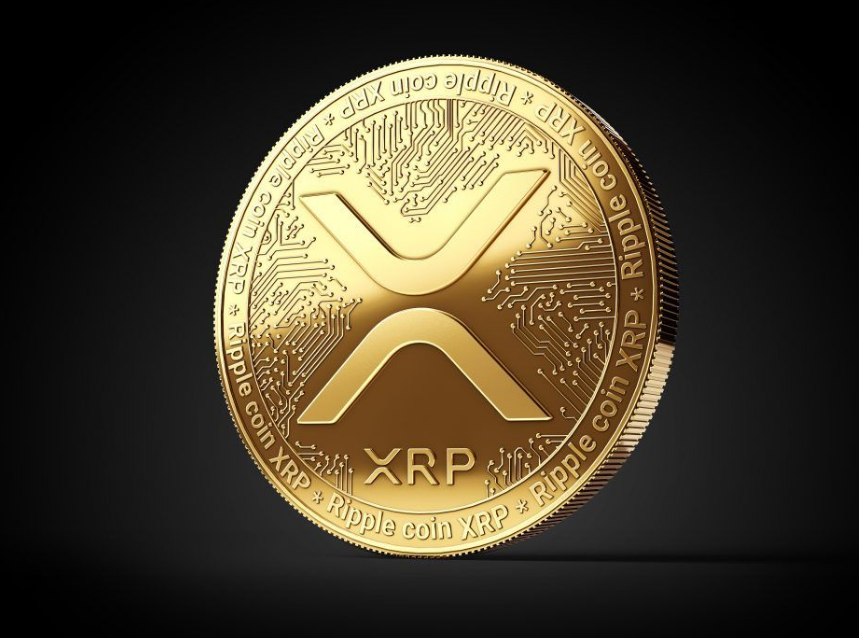
Hong Kong and Dubai-based custodian Hex Trust, together with cross-chain protocol LayerZero, officially launched wrapped XRP (ticker: wXRP) on Solana this week, instantly connecting Ripple’s massive holder base to the fastest-growing DeFi ecosystem in crypto without forcing anyone to sell their original tokens.
The move ends years of waiting and instantly ranks as one of the biggest cross-chain liquidity events of 2024.
XRP is currently trading 59% below its January 2018 all-time high of $3.84 and has spent most of the past three years stuck in a tight range. Meanwhile, Solana has become the undisputed king of retail DeFi activity, processing over $100 billion in stablecoin volume in the last 90 days alone.
For the first time ever, XRP holders can now send their tokens to Solana, swap into USDC or USDT, and jump straight into Jupiter, Raydium, Kamino, or Drift without ever touching an exchange or paying capital gains tax in many jurisdictions.
How the Bridge Actually Works
Hex Trust takes native XRP into custody using its institutional-grade wallets licensed in Hong Kong and Dubai. The exact amount of XRP is then minted as wXRP on Solana through LayerZero’s ultra-light messaging system.
The process is fully trust-minimized on the Solana side and takes less than ten seconds in most cases. Users on the XRP Ledger side simply send XRP to the Hex Trust gateway address and receive wXRP directly in their Phantom, Backpack, or Solflare wallet.
Early data shows more than $28 million in wXRP was minted in the first 48 hours, with the vast majority flowing straight into Solana’s top liquidity pools.
On-Chain Numbers Tell the Real Story
Despite the excitement, the inflow is still modest compared to Solana’s daily volume.
Here’s what actually moved in the first five days:
- Total wXRP minted: $41.3 million
- Peak 24-hour volume on Jupiter: $19.7 million
- Largest single trade: $4.2 million (unknown whale)
- Current wXRP in Kamino lending vaults: $11.8 million
- Current wXRP in Raydium USDC pool: $9.4 million
Yes, XRP holders are coming. But they are coming carefully.
Most of the early flow is from mid-sized holders ($100k–$2m range) rather than the mega whales who still sit on billions in cold storage.
Ripple CEO Breaks Silence
Brad Garlinghouse posted on X late Wednesday: “Watching XRP holders discover Solana DeFi in real time is incredibly fun. This is just the beginning.”
He’s not wrong about the mood. The Solana side of crypto Twitter has been flooded with first-time XRP army members posting screenshots of 100x leverage trades on Drift and 40% APY on Kamino.
Some are already calling it “The Great Migration.”
The Bigger Picture Nobody Is Saying Out Loud
This launch is quietly serving as a stress test for Ripple’s long-term relevance.
If meaningful liquidity permanently shifts from XRPL to Solana, Ethereum, or Base over the next 12 months, the narrative that “XRP is only for cross-border payments” gets destroyed in real time.
Every dollar of wXRP earning 25–50% yield on Solana is a dollar that no longer cares about RippleNet, ODL, or regulatory clarity.
That’s the real story here, and everyone knows it.
The launch couldn’t have come at a more critical moment for both ecosystems. Solana is fighting memecoin fatigue and needs serious institutional-grade assets to deepen liquidity. XRP holders are exhausted after seven years of waiting for “the flippening.”
Both sides just found exactly what they needed in each other.
Whether this becomes a one-month rotation or the start of a permanent shift will be decided in the next 60–90 days.
One thing is already certain: the wall between the XRP army and the Solana degens just came crashing down.
 Bitcoin
  Ethereum
  BNB
BNB  Solana
  Chainlink
  Cardano
  Sui
Sui  Avalanche
  NEAR Protocol
  Bittensor
  Polkadot
  Mantle
  Internet Computer
  Quant
Quant  Kaspa
Kaspa  Render
  Algorand
  Cosmos Hub
  Jupiter
  Filecoin
  Arbitrum
  Injective
  Aptos
Aptos  Pyth Network
  Celestia
  Sei
Sei  Stacks
  Optimism
  The Graph
  Akash Network
  THORChain
  dYdX
dYdX  Immutable
  MultiversX
  Beam
Beam  Flow
Flow  Kujira
  Manta Network
  Illuvium
  Metis
Metis  Dymension