

Bitcoin miners just pumped up their holdings by a whopping 2,417 BTC, worth about $220 million, in a bold move that could shake up the crypto market. This happened from November 23 to December 4, 2025, right as Bitcoin’s price steadied above $90,000. But why are miners holding back instead of selling? Dive in to see how this cuts supply and might push prices higher.
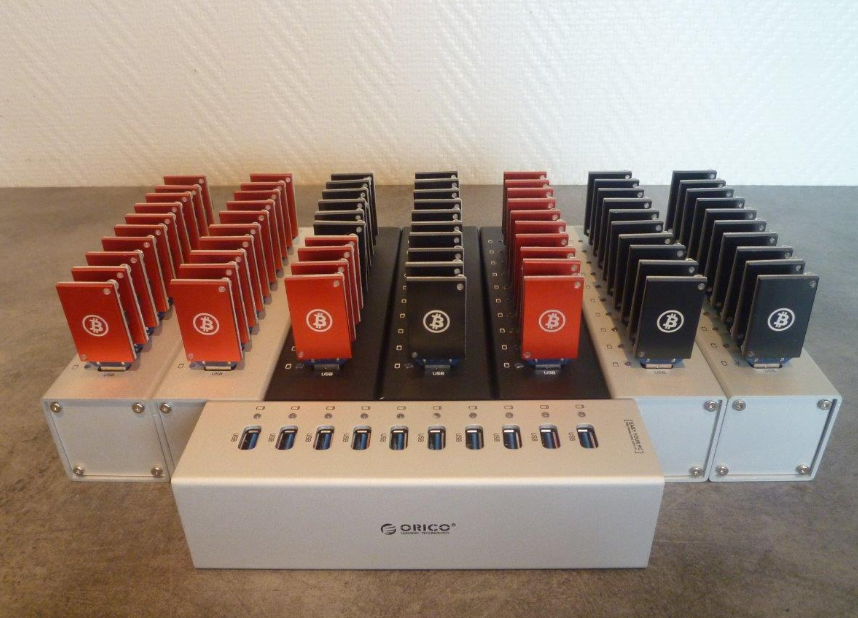
Bitcoin miners have stepped up their game, adding 2,417 BTC to their reserves over an 11-day stretch. This boost raised their total from 1,803,633 to 1,806,050 BTC. At current prices, that’s like tucking away $220.4 million in digital gold. Analysts say this reduces the amount of Bitcoin hitting the market, which eases selling pressure.
This isn’t just random. Miners often sell coins to cover costs like electricity and gear. But lately, they’ve chosen to hold. Data from blockchain trackers shows this trend started as Bitcoin hovered around $90,000. It signals confidence in future gains.
One key factor? The recent Bitcoin halving earlier in 2024 cut mining rewards in half. That makes each coin more valuable to hold onto. Miners might expect prices to climb, making their stash even bigger.
How This Affects Bitcoin’s Supply and Demand
By holding more Bitcoin, miners shrink the circulating supply. That’s huge because Bitcoin has a fixed cap of 21 million coins. Less supply with steady demand can drive prices up. Right now, with Bitcoin consolidating above $90,000, this move could spark a rally.
Think about it like this. If fewer coins are available, buyers might pay more. Recent reports show institutional investors pouring money into Bitcoin ETFs. For example, inflows hit record highs in late November 2025, pushing demand.
But it’s not all smooth. Miners face high costs. Electricity bills alone can eat into profits. Yet, with Bitcoin’s price rebounding from a dip to $86,000 in early December, many see this as a smart bet.
- Reduced selling: Miners sold less, stabilizing the market.
- Supply squeeze: Tighter supply often leads to price jumps.
- Investor boost: More holdings signal long-term faith in Bitcoin.
Market Reactions and Broader Trends
The crypto world buzzed with this news. On December 4, 2025, Bitcoin traded near $93,000, up from recent lows. Traders watched closely as short positions got liquidated, wiping out over $1 billion in bets against Bitcoin.
Experts point to bigger forces at play. The U.S. Federal Reserve’s hints at rate cuts have fueled optimism. Lower rates make risky assets like Bitcoin more appealing. Plus, pro-crypto policies from incoming leaders add to the hype.
One trader noted how miners’ actions mirror past bull runs. Back in 2021, similar hoarding preceded Bitcoin’s surge to $69,000. Today, with prices already above $90,000, history might repeat.
Still, risks linger. Volatility remains high. A sudden drop could force miners to sell. But for now, the mood is upbeat.
| Date Range | BTC Added | Reserve Change | Approx. Value |
|---|---|---|---|
| Nov 23 – Dec 4, 2025 | 2,417 | +2,417 | $220M |
| Prior Month | Varies | Steady | N/A |
This table shows the quick buildup. It’s a snapshot of miners’ shift from sellers to holders.
What This Means for Investors and the Future
Individual investors feel the ripple effects. If you’re holding Bitcoin, this could mean steadier prices and potential gains. Newcomers might see it as a green light to jump in, especially with Bitcoin eyeing $100,000 by year’s end.
Looking ahead, predictions vary. Some analysts forecast Bitcoin hitting $120,000 in 2026, driven by adoption and ETF growth. Others warn of corrections if global events shake confidence.
Miners’ decisions often predict trends. Their recent accumulation suggests they believe in Bitcoin’s strength. As the market evolves, watch for more such moves.
In the end, Bitcoin miners’ decision to add $220 million to their reserves while the price holds firm above $90,000 paints a picture of quiet confidence in a volatile world. It’s a reminder that in crypto, smart holds can turn into big wins, sparking hope for everyday investors dreaming of the next big surge.
 Bitcoin
  Ethereum
  BNB
BNB  Solana
  Cardano
  Chainlink
  Avalanche
  Sui
Sui  Bittensor
  Mantle
  Polkadot
  NEAR Protocol
  Internet Computer
  Algorand
  Quant
Quant  Render
  Cosmos Hub
  Kaspa
Kaspa  Aptos
Aptos  Filecoin
  Jupiter
  Arbitrum
  Stacks
  Sei
Sei  Injective
  The Graph
  Celestia
  Pyth Network
  Optimism
  THORChain
  Akash Network
  Immutable
  MultiversX
  Beam
Beam  dYdX
dYdX  Flow
Flow  Illuvium
  Kujira
  Manta Network
  Metis
Metis  Dymension